

From one-off training to everyday capability – how strategy makes learning stick
By Bianca Schimizzi
Director & Lead Instructional Designer | Hungry Minds
Great learning doesn’t happen by accident. It happens by design, and that starts with a clear, business-aligned learning strategy. In fact: a clear learning strategy is the only way your in-house training will shift performance, behaviour, and culture.
In this guide, you’ll find out what a good learning strategy looks like, how to build one that actually works, and why it’s one of the most important levers in business.
We’ll take you behind the scenes of how Hungry Minds designs strategy that enables real change—not just one-off programs. Whether you’re leading a full L&D function or juggling learning design on top of ten other hats, this is your blueprint.
“A real learning strategy is more than a calendar or a course catalogue. It’s how you bake capability into culture.”
Here’s what we’re serving up:
What a learning strategy really is; and why most organisations get it wrong
Before you design: key questions to set your strategy up for success
Learning + business goals = Great Outcomes: How to align without over-engineering
What to include (and leave out) for a usable, high-impact strategy
The Hungry Minds method: co-designed, future-focused, and refreshingly practical
Measuring what matters: how to track the impact of your learning strategy
Real-world examples of strategy in action (spoiler: they don’t start with training)
The business wins: what a great learning strategy does for people, culture, and performance
What a learning strategy really is—and why most organisations get it wrong
A bit of myth-busting: a learning strategy is not a training calendar. It’s not a stack of eLearning modules, and it’s definitely not a one-off presentation that’s immediately forgettable.
A real learning strategy is your blueprint for building capability. Put plainly: It helps people understand what ‘great’ looks like—and outlines how you’ll get your people there.
Crucially, your learning strategy is the plan that connects what your people are learning to how your organisation grows, performs, and ‘shows up’.
Here’s what a learning strategy looks like:
A clear link between learning and strategic goals
A shared understanding of what success looks like (and how to get there)
Learning that fits how people actually work, not bolted on top
Tools, processes, and rituals that make learning part of the culture
Where learning strategy goes wrong
It’s easy to confuse activity with impact. If you’re busy launching programs and building resources, but your teams feel unsupported and disengaged, you’re not alone.
What you’ve got is a strategy gap. Without a strategy, you’re solving the wrong problems, or solving the right ones in ways that won’t stick.
We’ve been working with teams since 2008. And even the biggest and best often come to us without a real plan. They have incredible intent… but no alignment between what the business is asking for and what their learners actually need.
A clear, business-aligned strategy lets you:
Say no to what doesn’t serve you
Say yes to what really moves the needle
Build capability in ways that are scalable, measurable, and (frankly) worth leaning into
Before you design: 5 questions to set you up for success
Before you choose a platform, write a plan, or build a single screen, you need to ask the right questions. Answering these questions up front saves time, sharpens focus, and makes sure the learning strategy actually delivers with purpose.
If you’re looking for faster onboarding, stronger performance, clearer culture signals, and fewer ‘why are we doing this?’ moments, start here.
What’s the actual problem we’re solving?
What’s happening now that shouldn’t be?
What’s not happening that should?
Is this really a learning need?
Or is it a culture, process, or leadership gap?
Why it matters:
Misdiagnosing the problem means wasted time, budget, and effort. When you ask the hard questions early, you avoid building a learning program to fix what’s actually a systems or leadership issue.
That’s how you protect ROI, and make sure learning does what it needs to do.
What does success look like?
What should people do, say, or decide differently?
How will we know this worked without asking “did you like it?”
What will a leader notice if this lands well?
Why it matters:
Success should be measurable, noticeable, and worth chasing. Defining it clearly up front means no more post-launch scrambling for KPIs. It gives your team – and your stakeholders – a shared, visible target to hit.
Who should be in the room?
Who holds the vision?
Who is responsible for follow-through?
Who has veto power?
Why it matters:
Reusing what works saves money, speeds things up, and boosts consistency. This is how you build a smarter strategy without doubling the workload. No need to start from scratch when your pantry’s already stocked.
What’s already on the table—and how can we use it better?
What tools, touchpoints, or team rituals are already working well?
Where are people already paying attention?
What is underused? And could it be turned into something more useful?
What’s making a difference?
Which programs or touchpoints actually change how people think or work?
What do people engage with because they want to, not because they have to?
What is overly complicated or showing little return?
Why it matters:
You don’t need more learning—you need the right learning. Knowing what to stop, start, or scale keeps your strategy lean and high-impact. This is how you cut the noise, focus investment, and get better results with less noise.
You don’t need all the answers before you begin. But you do need the right questions. This curiosity is at the heart of every Learning Labs (powered by Hungry Minds) project. Because when it comes to strategy, thinking comes before building.
Step into the Learning Lab
We’ll help you connect strategy with what actually happens on the ground—so every learning initiative packs a punch. From co-designed strategy and custom templates to tech picks and team development, we’ll help you build something that sticks.
Learning + business goal = Perfect Pairing: How to align without over-engineering
Not to lean too heavily on this cooking metaphor, but if your learning strategy isn’t moving the business forward, it’s going to spoil the pudding.
At Hungry Minds, we know high-impact learning has three characteristics: It’s aligned, embedded, and worth doing.
Training is aligned to what matters most
In short, learning should support what the business is already trying to achieve.
When every training initiative maps to a clear business shift, learning goes from ‘nice to have’ to mission-critical.
Tangible steps:
Ask leaders: What are the top three shifts the organisation needs to make this year?
Define the skills and behaviours that will make each shift happen
Prioritise the learning that supports these shifts—and park the rest
For example: If the goal is to lead through uncertainty, don’t build a “resilience” module. Instead, design learning that helps people make decisions in grey areas, coach in real time, and show up with clarity.
Training is embedded into real work—not ‘tacked on’
If learning only happens in training sessions, it won’t last. The best learning shows up in the moments people make decisions, lead teams, or solve problems. At Hungry Minds, we call this a Learning Campaign.
Tangible steps:
Find the natural points where learning could live: onboarding, team rituals, system use, performance convos
Add just-in-time tools and prompts; things people actually use on the job
Reinforce key behaviours with nudges, not new admin
For example: Want a better feedback culture? Bake reflective prompts into team meetings and manager 1:1s, and scrap the once-a-year workshop.
Training is relevant, timely, and captures people’s attention
Your teams don’t hate learning. They hate unhelpful learning. Relevance and meaning are the difference between buy-in and blank stares.
Tangible steps:
Involve your people early; ask what’s getting in their way, and what would actually help
Swap generic content for real scenarios, language, and tools from your context
Make it useful: If it doesn’t help them today, they won’t remember it tomorrow
For example: If your teams are short on time and under pressure, a one-pager they can use ‘just-in-time’ will beat a beautifully-produced module. Every time.
When learning is aligned to what matters, embedded in the flow of work, and genuinely useful, it becomes a strategic asset. Do that—and you’ll find the sweet spot. Where training fuels business outcomes, culture shifts, and confident action.
What to include (and leave out) for a high impact learning strategy
TL;DR
You don’t need another 40-page strategy that no one reads. You need a strategy your people can use. Done right, your learning strategy can shape decisions, spark action, and make sense to everyone it touches.
A solid learning strategy is a working recipe. Here’s what to serve up (and what to leave in the kitchen).
Your learning strategy should include:
A clear purpose
This sets the tone. Your strategy should clearly answer the question: What are we here to change? It might be capability, culture, or internal confidence. Whatever it is, this is the place to be bold and specific.
Your design DNA
Any strategy worth its salt defines what good learning looks like in your organisation. This includes: the learning models that work best, design processes, tone of voice, and look-and-feel examples.
These are the standards that shape every piece of instructional design, from a one-page guide to a flagship program.
Capability priorities
Don’t try to fix everything at once. Name the top 3–5 skills or behaviours that move the needle, and build around them.
A picture of success
Paint the before-and-after. What will teams be doing differently if this strategy works? What will leaders notice? Keep it human, observable, and easy to reference.
Tools that make it real
Bring the ideas to life with templates, tone-of-voice guides, look-and-feel samples, and practical build tools. Your strategy should come with a stocked pantry.
Leave these things out of your learning strategy:
Vision statements no one remembers
If it doesn’t shape decisions or show up in your builds, ditch it. Inspiration’s great, but not at the cost of clarity.
Overcomplicated theory
Your strategy should definitely be based on learning theory, but it doesn’t need to brag about it. Keep academic frameworks on the bookshelf unless they’re necessary in context.
Stretch goals
Be honest about your resourcing. A high-impact strategy you can deliver beats a perfect one you’ll never launch.

The Learning Labs method: co-designed, future-focused, and refreshingly practical

The Learning Labs method:
Co-designed, future-focused, and refreshingly practical
If you’re like me, you’ve seen enough 80-slide decks to last a lifetime. A learning strategy is different. That’s because it lives in decisions; what to build, what to skip, how to make learning meaningful, and how to make it stick.
In the Hungry Minds Learning Lab, we co-design strategies that change how organisations learn, lead, and grow. Sink your teeth into our process:

Bite 1: Pop the hood
Using our in-depth discovery process, we explore your organisation and the segments of your workforce, their needs, and what might spark their curiosity for learning.
What we do:
Talk to humans
Program, policy, and platform analysis
Map skills gaps and identify quick wins
Why it matters:
This step removes guesswork. It gives you a clear, shared understanding of where learning can actually make a difference, so you can focus your effort where it counts.
Bite 2: Get creative
Next we collaborate to craft your learning kit. This is your learning manifesto. And it outlines the best approach for each of your cohorts, the best delivery method, and how learning will look and feel moving forward.
What we do:
Co-design learning principles that actually guide design
Link behaviours to business outcomes (no fluff, no filler)
Align formats to real-world work rhythms
Create a sharp, visual, useful strategy doc
Why it matters:
When your team knows what good looks like, they don’t have to ask for permission—they just get building.
Bite 3: Build
Once you are happy with the direction we are taking, we start to build out the kit. And we’ll fill it with all the tools and templates you’ll need to bring the ideas easily and rapidly to life.
What we do:
Design toolkits for storyboarding, facilitation, and evaluation
Build branded templates that make good design the default
Create snackable guides your team will actually use
Why it matters:
This is how you scale quality without bottlenecks. The right tools mean faster builds, sharper content, and fewer 11pm design panics.
Bite 4: Road test
We take your new kit out for a spin! Naturally, we’ll support you to apply the approach and templates in a project within your organisation.
What we do:
Pilot the strategy on a live project
Involve your team in every step
Gather honest feedback
Tweak for clarity, speed, and resonance
Why it matters:
You’ll walk away with proof of concept and proof of value. And your team will know how to make it fly without us.
Bite 5: Review + amend
We assess the program and identify what to stop, start, and keep. Post-pilot tweaks are made, based on feedback.
What we do:
Run a strategic debrief with your team
Capture wins, gaps, and ideas for next time
Make a plan to keep the momentum going
Why it matters:
Your strategy is a living document. This step makes sure it stays useful and relevant.
Hungry Minds Learning Lab will change the way your organisation learns. We’ll help you connect your learning strategies with your business goals, so every initiative packs a punch, keeps your teams engaged, and builds a culture where growth and improvement are the norm.
Measuring what matters: how to track the impact of your learning strategy
If you’re not measuring the right things, you’re not learning, you’re guessing. And guessing doesn’t change behaviour or shift performance.
Remember: you’re not measuring to pump the L&D team’s tires. You’re measuring to drive better decisions, sharper execution, and faster growth. Here’s how to design a measurement approach that’s practical and meaningful.
If you’re not measuring the right things, you’re not learning, you’re guessing. And guessing doesn’t change behaviour or shift performance.
Remember: you’re not measuring to pump the L&D team’s tires. You’re measuring to drive better decisions, sharper execution, and faster growth. Here’s how to design a measurement approach that’s practical and meaningful.
Look at outcomes (not just completions)
While course completions look great on an LMS dashboard, they don’t translate into great gains for the organisation. Instead of asking how many people completed the course, think bigger. Ask: Did the course change how they show up, engage, and deliver?
What to track
Behaviour shifts: are people actually applying what they learned?
Decision quality: are teams making better, more efficient calls?
Confidence: are people leading with it—not just talking about it?
Pro tip: Anchor your measures to the business metrics that matter in your organisation. These might be growth, retention, innovation, quality, risk or customer experience.
Build feedback into the process
If you only listen at the end, you’re too late. One-and-done evaluations don’t tell you what’s landing or what needs a nudge. On the other hand, continuous feedback keeps your learning relevant, timely, and business-critical.
What to do
Gather stories: What changed after the learning? What feels different each day?
Check in often: Track behaviour at 30, 60, and 90 days, nothing changes overnight
Ask leaders: Are new behaviours showing up in meetings, projects, team dynamics?
Pro tip: Feedback is a strategic tool and not an afterthought. Blend real time insights with smart metrics and use them to refine and iterate as you go.
Look beyond learning
This is where so many L&D teams miss the mark: they think learning is the end goal. Really, it’s the engine for better work. Your learning strategy should leave fingerprints on the metrics that actually move your organisation forward. If it’s not? You’re doing it wrong.
What to track:
Faster project delivery
Higher customer satisfaction
Fewer re-work cycles
Boosted innovation
Pro tip: Those small, early shifts prejudice bigger wins. That’s what you need to identify, track, and tweak.
Review often
Like a good risotto, your learning strategy isn’t a set-and-forget situation. As time passes, your organisation changes. What worked six months ago, might not hit today. But when your strategy is sharp, it’s also agile.
What do do:
Audit regularly: What’s driving real outcomes? What’s just noise?
Cut ruthlessly: Kill what’s coasting. Invest in what’s making a visible dent in behaviour, culture, and performance
Test, tweak, repeat: While regular reviews can feel like admin, they’re actually your unfair advantage
Pro tip: Treat your learning strategy like you treat your best products. If it’s not getting better, leave it behind.
Real-world examples of strategy in action (spoiler: they don’t start with training)
Here’s what happens when you stop asking ‘what training do we need?’ and start asking ‘what are we here to change?’
CHIA Vic: From solid content to capability that sticks
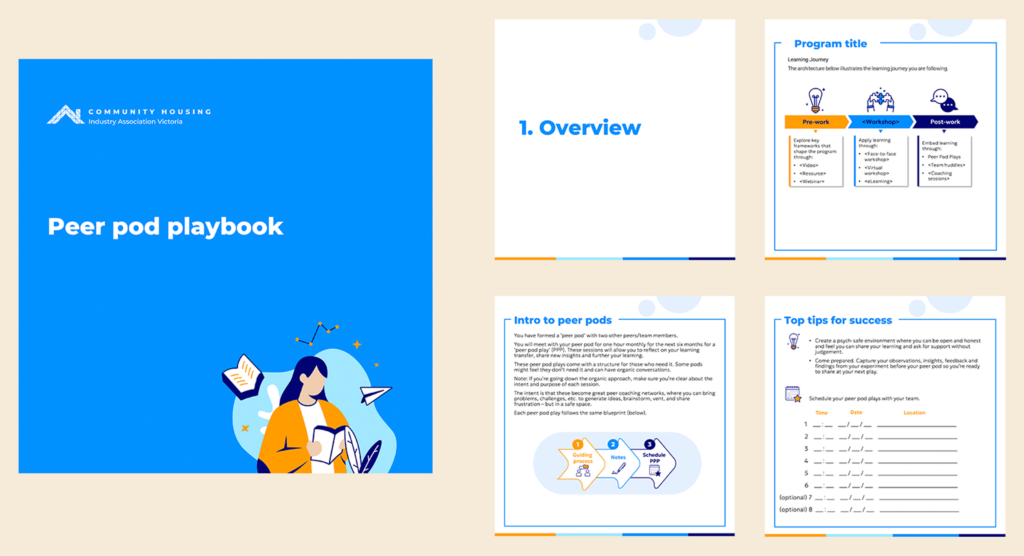
The Community Housing Industry Association Victoria (CHIA Vic) already had decent programs. What they didn’t have was a strategy to scale them, or a system to build internal capability without external hand-holding.
We started by reviewing and reworking their existing programs through a strategic lens:
Reimagined their programs around real capability gaps, not just content needs
Built a strategy that aligned learning design with their strategic outcomes
Designed and delivered instructional design training for their internal team, plus a toolkit of templates they could actually use
And it led to real shifts in their outcomes as an organisation:
These days, their teams design learning that fits real-world needs—without outsourcing or second-guessing
Faster build cycles, better alignment to business goals, and learning that supports CHIA Vic’s broader mission
Check out the full case study: How CHIA Vic built better learning to serve Victorians who need housing
South32: Leadership development beyond the workbook
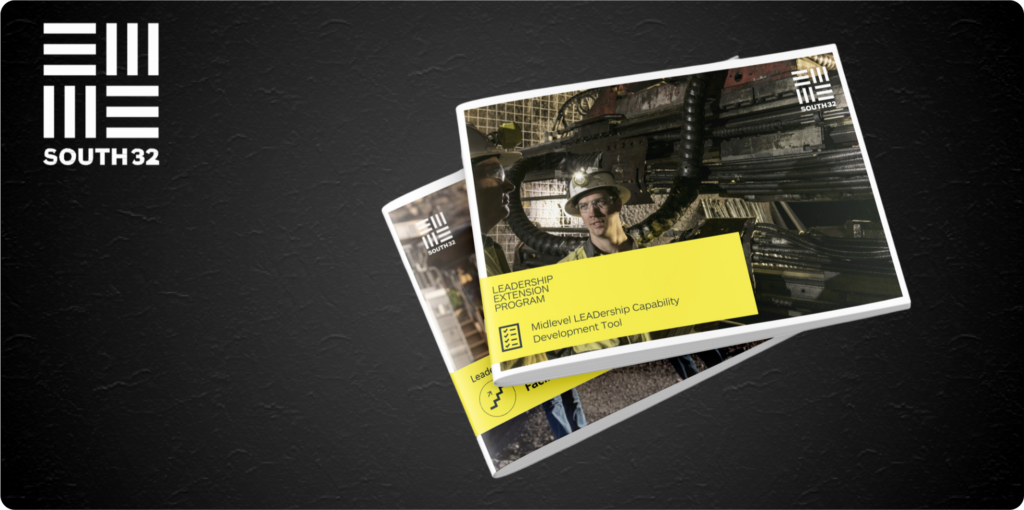
South32 needed their leaders to show up differently. So they could coach better, lead more efficiently, and build stronger teams across regions.
What we did
Co-designed a leadership strategy that was more than just knowledge transfer it embedded real behaviour shifts
Delivered a blended learning journey: practical workshops, peer learning circles, and guided coaching that anchored new habits
Built reinforcement into everyday leadership practice
Business shifts
Mid-level leaders now drive real cultural and performance gains, not just compliance with a leadership model
Leadership development is part of the culture baked into how people lead, coach, and grow every day
Stop designing for the course. Start designing for the culture.
We help organisations to build learning strategies that scale capability, shift behaviour, and drive performance where it counts.
Let’s build something your people – and your business – will love.
Book a call with Michael to find out how Learning Labs, powered by Hungry Minds can get you cooking.
FAQS
A learning strategy is the game plan for how an organisation builds skills, shares knowledge, and grows its people. It connects learning to real business goals – so it’s not just training for training’s sake.
A good learning strategy helps answer:
- What do we need our people to be able to do?
- What skills or mindsets are we building for the future?
- How will we design, deliver, and measure learning that works?
It’s part roadmap, part rally cry – and when done well, it helps learning become a driver of performance, not just a support act.
Hungry for more?
Related blog articles:
- Why poor training costs more than you think (and how better strategy fixes it)
- Instructional design strategy vs. content design: why your learning needs more than good slides
- 5 questions smart teams ask to avoid digital learning mistakes
- Needs analysis: the part of learning strategy everyone skips
- Learning Labs