






Project duration: 6 months
Delivery method: Blended learning, digital workbook (eLearning), facilitated classroom sessions, real-world excursions, guest speakers
Learning Strategies: Learner voice-informed design, sequenced curriculum architecture, experiential learning, role play and simulation, flexible assessment design, hands-on activities
Deliverables: Full suite of learning materials across two years, digital workbooks (eLearning), slides, workbooks, assessment tools, facilitator guides, plus a complete learning architecture and curriculum map
Tools: Articulate Rise 360, Adobe Creative Suite, Canva, Microsoft
Objective: Redesign the learning materials for the 22681VIC Certificate II in Rail Fundamentals (Pre-vocational) — a two-year accredited qualification for secondary students, to better reflect what young learners actually want, and to build genuine excitement about careers in rail
About the client
The Level Crossing Removal Project (LXRP) is one of the largest rail infrastructure programs in Victoria’s history, removing 110 dangerous and congested level crossings across Melbourne by 2032, while rebuilding stations, upgrading lines, and transforming communities along the way. It’s a once-in-a-generation undertaking, and it needs a next generation of workers to match.
Through its Rail Academy, LXRP supports the Certificate II in Rail Fundamentals, a VET in Schools program designed to give secondary students a genuine, immersive preview of careers across Victoria’s heavy and light rail network. The program is part of LXRP’s broader commitment to building the rail workforce pipeline that Victoria’s Big Build depends on.
The need
Victoria is facing a forecast skills shortage across the rail industry over the next decade. Attracting young people into rail, and keeping them interested long enough to make it a real career consideration, requires more than a classroom and a textbook.
The existing Certificate II program had real strengths: incredible access to live rail sites, industry guest speakers, and facilities like the Rail Academy Newport that most students could only dream of. But the learning materials weren’t keeping pace with what students actually wanted. Feedback from learners was clear, they came for the tracks and trains, they wanted to get hands-on from day one and they found presentations nerve-wracking. The materials needed to work harder to match the energy of the experience happening outside the classroom.
LXRP needed a redesign that would take two years of complex, unit-mapped curriculum and turn it into something young learners would genuinely want to show up for, without compromising the rigour of an accredited qualification.
The goal was to thoughtfully redesign the experience so learners could engage with complex and confronting topics in a way that felt reflective, accessible, and genuinely meaningful. Challenge DV wanted an online course that maintained the heart of the original program while making learning more flexible, scalable, and engaging.
The goal was to build learners’ confidence, capability, and understanding, while challenging assumptions and encouraging reflective, affirming practice. Importantly, the program needed to meet learners where they were – from highly engaged students through to those who felt reluctant or unsure – and create a safe, evidence-based pathway toward more inclusive healthcare practices.
The learning solution
Hungry Minds started where any good learning design starts: with what learners actually told us. The ‘What we heard’ phase surfaced real student feedback, excursions are the standout, hands-on activities work, video assessments reduce pressure, photos need to be sharper and in colour, not everyone is packing a laptop. Every design decision that followed was answerable to that feedback.
The learning architecture was rebuilt from the ground up with a deliberate sequencing strategy: front-load Year 1 with the content students came for, then build toward career readiness in Year 2. This wasn’t just a scheduling choice, it was a retention strategy. Get students hooked on the real thing early, then give them the tools to turn that excitement into a career.
The hero learning activities in both years reflect this thinking. Year 1 takes students to maintenance depots to inspect rolling stock from the underside, to signalboxes to operate real signal panels and communication systems, to Southern Cross to see how the entire Victorian network interconnects, and to the Rail Academy Newport for treasure hunts matching schematic symbols to live equipment. Year 2 has students using Metro Academy’s X’Trapolis cab train simulator, practising customer service announcements over real PA systems at Flinders Street Station, conducting original research and interviewing industry SMEs, and visiting the Metro Tunnel Operational Control Centre to see automated train systems in action. Young people don’t just learn about rail here. They live it.
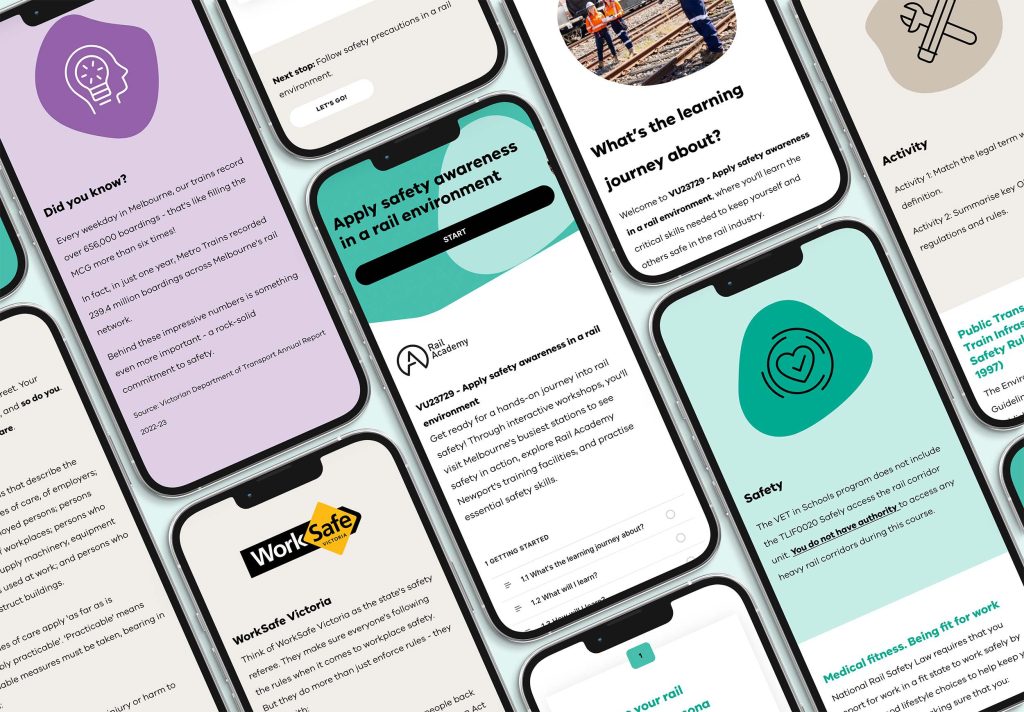
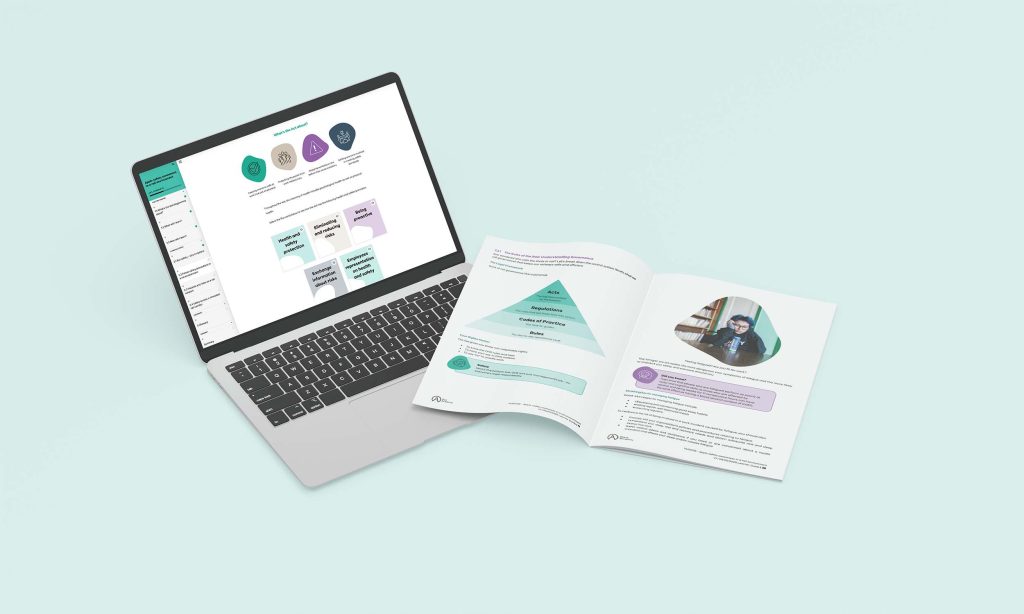
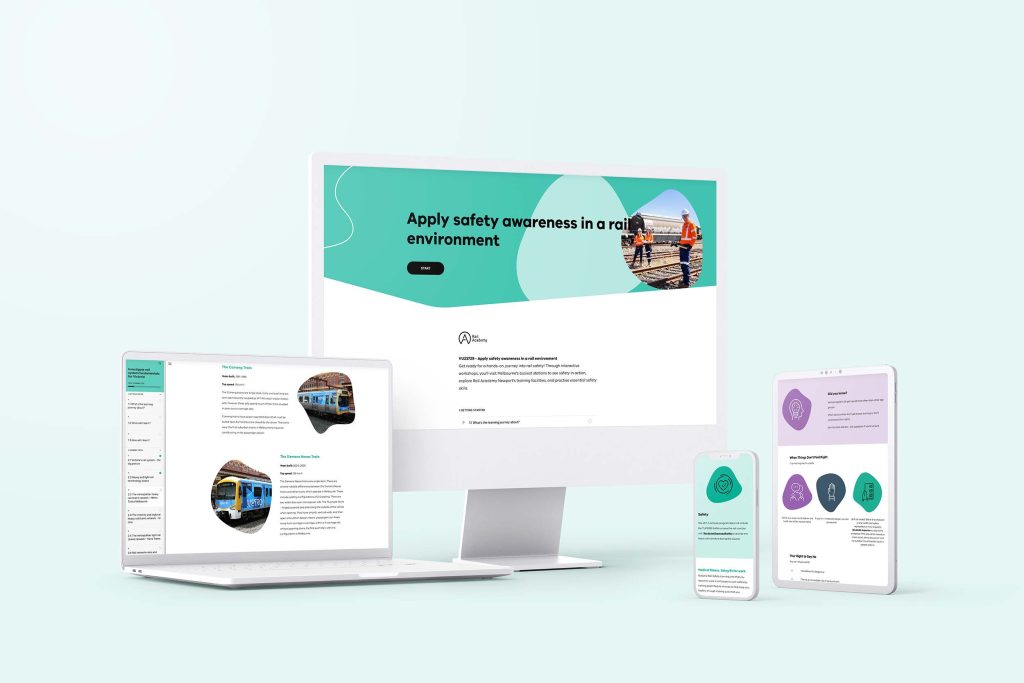
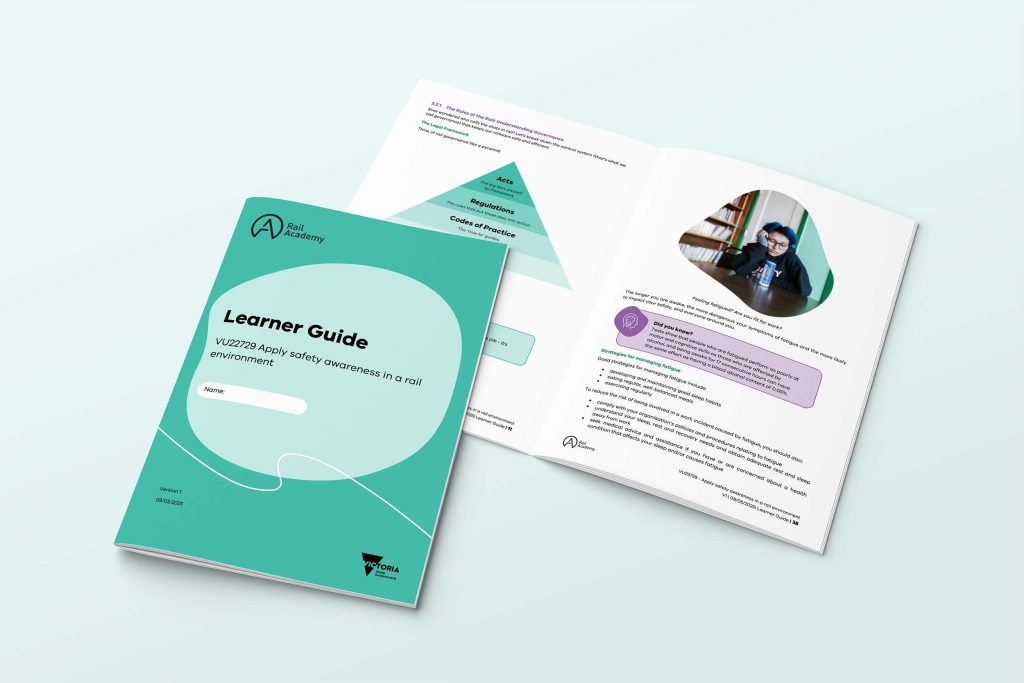
In the classroom, the learning materials were redesigned across the full suite, all developed within a consistent visual template aligned to the Rail Academy brand. Assessment design was rethought to reduce unnecessary pressure: video presentations replace traditional stand-up formats where appropriate, giving students more ways to demonstrate what they know.
The outcome
The redesigned Certificate II in Rail Fundamentals is ready to roll, students are in for a two-year ride that looks and feels nothing like a standard VET program.
The new materials represent a complete visual uplift from what existed before. A consistent, Rail Academy-branded design system runs across every touchpoint, giving the program a professional, cohesive look that signals to students from day one that this is something worth showing up for.
But the real drawcard is what happens off the page. The redesigned curriculum puts students inside working signalboxes, underneath rolling stock at live maintenance depots, on the platforms at Southern Cross and Flinders Street, behind the controls of a train simulator, and inside the Metro Tunnel Operational Control Centre. These aren’t field trips bolted onto a course, they’re the spine of the learning, sequenced deliberately to build knowledge, spark curiosity, and make the rail industry feel like somewhere a young person actually belongs.
As the program rolls out in 2026, LXRP has a qualification that finally matches the scale and ambition of Victoria’s Big Build, and learning materials designed to bring the next generation of rail workers along for the ride.
Full steam ahead!
The team
Nicole: Senior Instructional Designer
Olivia: Senior Instructional Designer
Michael: Managing Partner & Senior Learning Designer