

If you’re ready to move up, it’s time to sharpen your skills.
So, you’ve set your sights on instructional design and you’re ready to grow. But what separates a good designer from a great one? It’s not just tools or templates. It’s thinking.
The most in-demand instructional designers know how to dig into a problem, build with purpose, and deliver learning that works. These five instructional design skills will get you there – whether you’re making a move, stepping up, or starting fresh.
And if you want to build them properly, our Professional Certificate of Instructional Design gives you the tools, coaching, and portfolio to make it happen. Here’s what we’ll help you master – skill by skill.
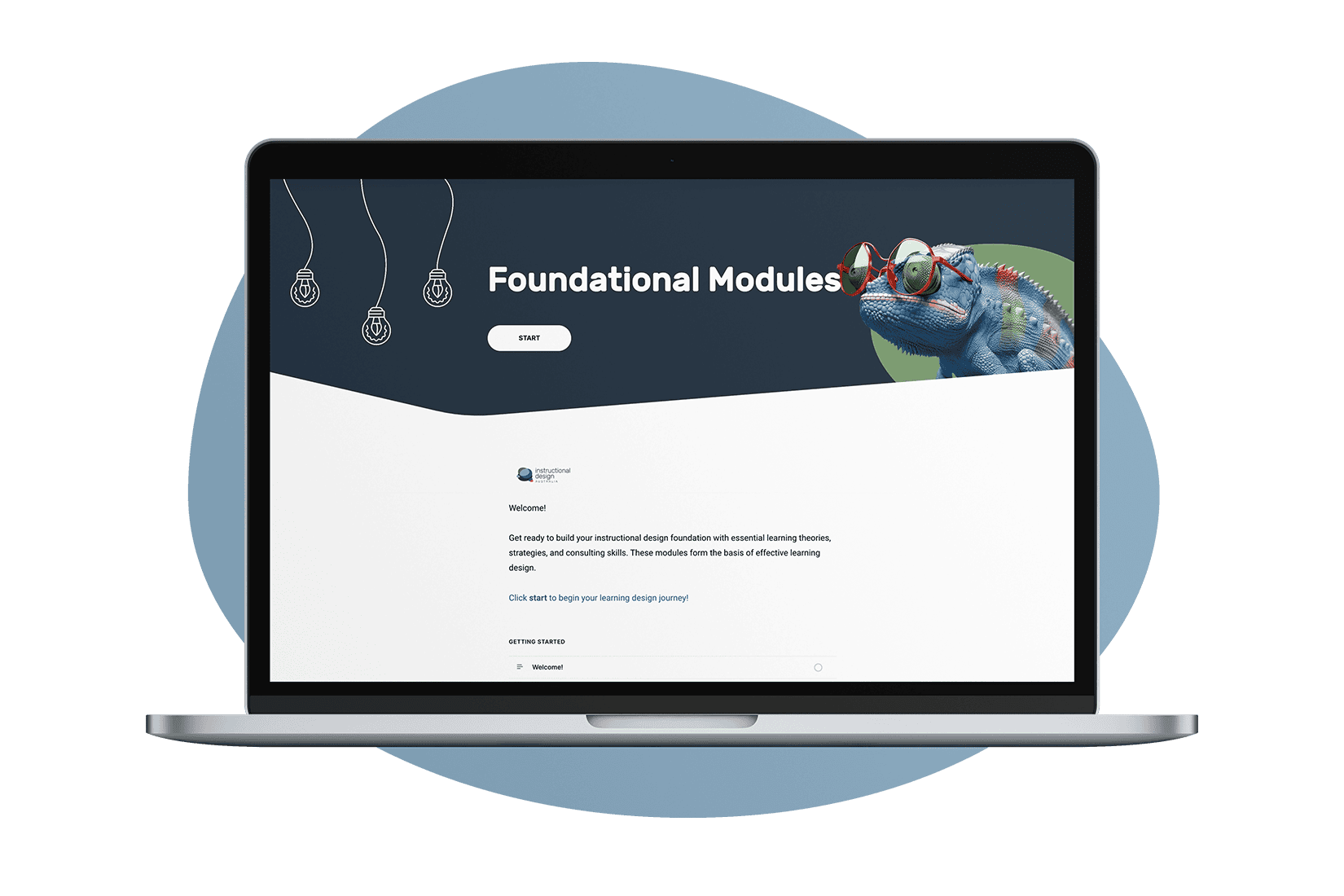

Find the problem
So. Many. Of. Our. Clients think a new course will solve their problems. But you and I both know that a course isn’t always the answer. That’s why strong IDs start with learning analysis. We ask the right questions, explore the root cause, and zoom out before we zoom in. This is how you shift from order-taker to trusted advisor.
How we’ll take you there
You’ll learn how to cut through vague requests and uncover what’s really going on – so you can design solutions that actually solve the problem. We’ll show you how to run a needs analysis, map it to business goals, and turn your findings into a brief that works in the wild.

Make learning stick
Instructional design isn’t just delivering content – it’s about memorable learning that changes behaviour. That’s where learning science comes in. There are proven ways to help learners retain content (especially when they’re busy, distracted, or under pressure). Learn it, and you’ll design learning that people remember – and use when it matters.
How we’ll take you there
We break the science down, then help you build it into your project. You’ll learn to structure information, design activities, and shape assessments that align with how people really learn – not how we wish they did. Then you’ll test, refine, and get expert feedback – so the theory becomes second nature.

Design with purpose
Every strong solution starts with structure. Models like ADDIE and First Principles help you plan, build, and flex when things change. These proven learning processes help you stay clear, creative, and aligned. Not only that, they give your work a backbone, especially when you’re juggling deadlines, stakeholders, and scope creep.
How we’ll take you there
You’ll use real frameworks to guide your own design project – right from discovery through to delivery. We’ll help you choose the right model, adapt it to the challenge, and apply it like a working ID.

Play well with others
Instructional design is a team sport. You’ll be working with subject matter experts, leads, and learners – often all at once. And it’s your job to steer the project and make clear, confident calls.
How we’ll take you there
You’ll learn to turn business goals into learning outcomes, guide feedback conversations, and navigate tricky input without losing momentum. Our coaching sessions give you the chance to test – and strengthen – your approach.

Prove it
A polished portfolio is your shortcut to new roles, clients, and opportunities. Not only that, it makes your process visible. Because hiring managers don’t just want to see what you built. They want to know why – and how – you built it.
How we’ll take you there
From the start, you’ll design a solution to a real problem. We’ll help you frame your thinking, highlight your decisions, and explain your process – so your work stands out for all the right reasons.
Start your instructional design career now
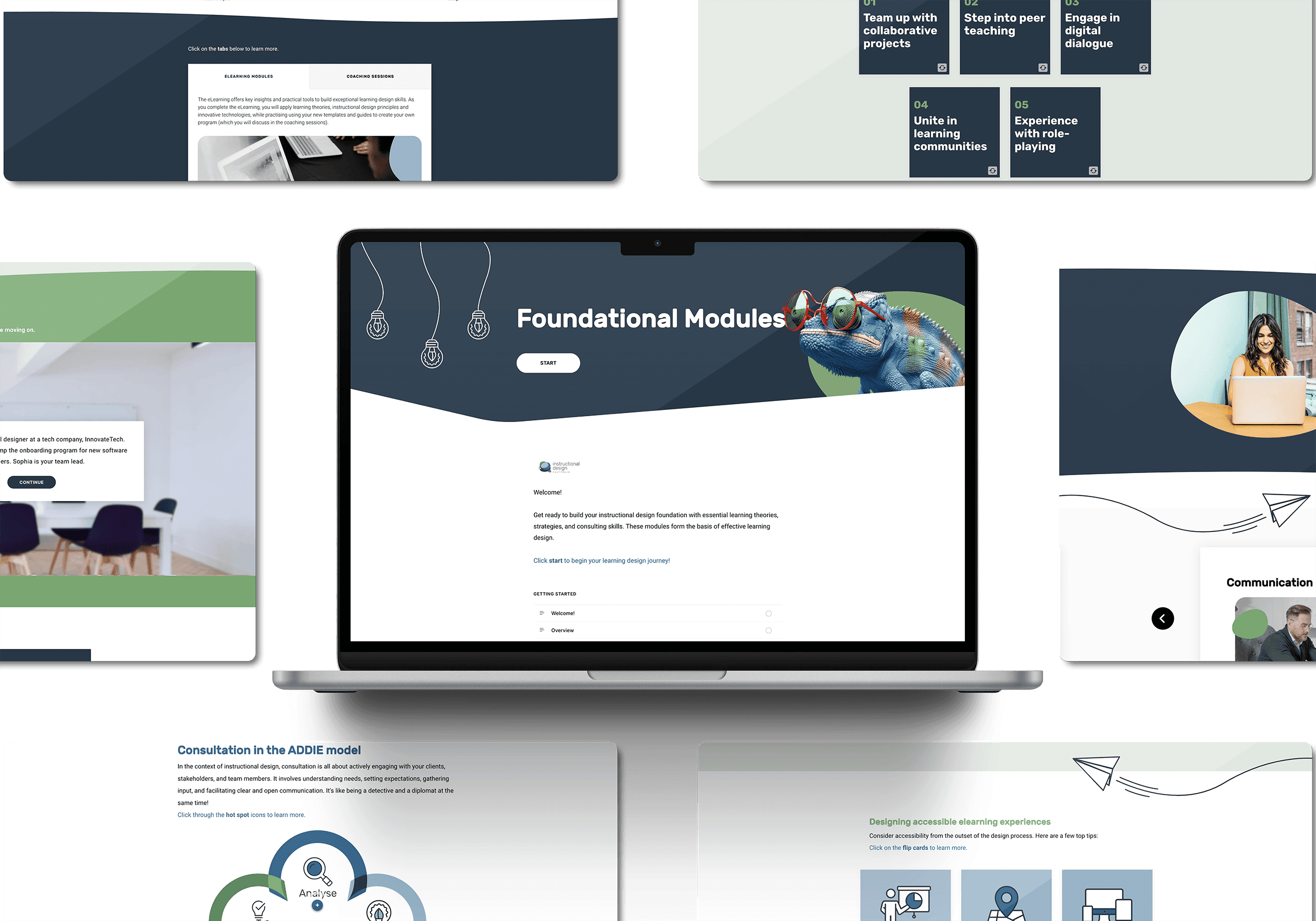
Earn your Professional Certificate in Instructional Design in just 12 weeks. One course – served with coaching, ready-to-use templates, a design portfolio, and a network that backs you.
FAQS
The three building blocks of instructional design are:
- Analysis: understanding the learning need, the audience, and the goals
- Design and development: creating the structure, content, and materials
- Evaluation: checking what worked, what stuck, and what needs refining
These components work together to make sure training is effective, engaging, and aligned with what the business actually needs.
Great instructional design starts with the learner – who they are, what they need, and how they work. It’s about setting clear objectives, making learning meaningful, and connecting it to real tasks and challenges. People learn best when they’re actively involved, not just watching or scrolling.
Feedback, reflection, and real-life application are also key. Learning should show up in the day-to-day, not just in the module. At Hungry Minds, these principles shape everything we create – so learning isn’t just delivered, it sticks.
Hungry for more?
Related blog articles: