

Explore your ID career paths to find the one that fits.
Instructional design isn’t a one-path career. You’ll find IDs working solo, embedded in teams, or juggling multiple projects as consultants. They’re all great choices, and it’s possible to shift between them over the course of your career. Here’s a look at the three most common ID career paths – and how to choose the one that suits your skills, goals, and lifestyle.
In-house: deep roots and steady growth
If you’re working in-house, chances are you’re part of a dedicated learning team. That means long-term projects, big-picture thinking, and building trust with the people you’re designing for.
You’ll work shoulder-to-shoulder with stakeholders, help shape culture from the inside out, and see your impact unfold over time. It’s the kind of work that rewards curiosity, empathy, and a love of learning that actually sticks.
The good:
- Real stability and structure
- A clear path to grow your craft
- Deep understanding of your learners
Heads-up:
- Progress can be slow
- You’ll work with fewer audiences
- Less variety – but more depth
Consulting: variety, scale, and strategy
As a consultant – freelance or with a team like Hungry Minds – you jump into new orgs, get across the challenge fast, and make things happen. You’re working across industries, shaping learning strategy, and bringing a big-picture brain to every brief. It’s bold, busy, and brilliant.
What's good:
- Diverse projects across industries
- Opportunities to lead with strategy
- A seat at the grown-up table
Heads-up:
- Timelines are tight, and so are the briefs
- You’ll need top-notch project and people chops
- You’re working fast – so you need a rock solid process
Freelance: flexibility, autonomy, and creative control
Freelancing means running your own show. You might specialise in eLearning development, offer end-to-end design, or focus on strategic consulting. You call the shots – but you also wear all the hats: designer, marketer, project manager, and business development lead.
What you'll gain:
- Work when, how, and on what you want
- Build your brand (or your niche)
- Creative control from start to finish
Heads-up:
- You’re responsible for everything – from pricing to pipelines
- Income can be inconsistent
- You’ll need sharp systems and firm boundaries

Act for Kids eLearning program, designed in Chameleon Creator.
Choose your own adventure
Whether you’re drawn to the depth of in-house work, the variety of consulting, or the freedom of freelancing, each path brings something valuable to the table. You’ll stretch different skills, solve different problems, and see the impact of your work in new ways.
The best part is, your career path can shift. This isn’t about picking a lane – it’s about building a career that gives you what you want.
Hungry for more?
In our full guide to growing your instructional design career, we’ll help you map out your path – whether you’re changing careers or levelling up.
Grab the guide: Grow your instructional design career in 2025 – build an instructional design career – get the tools and skills you need to get hired.
Start your instructional design career now
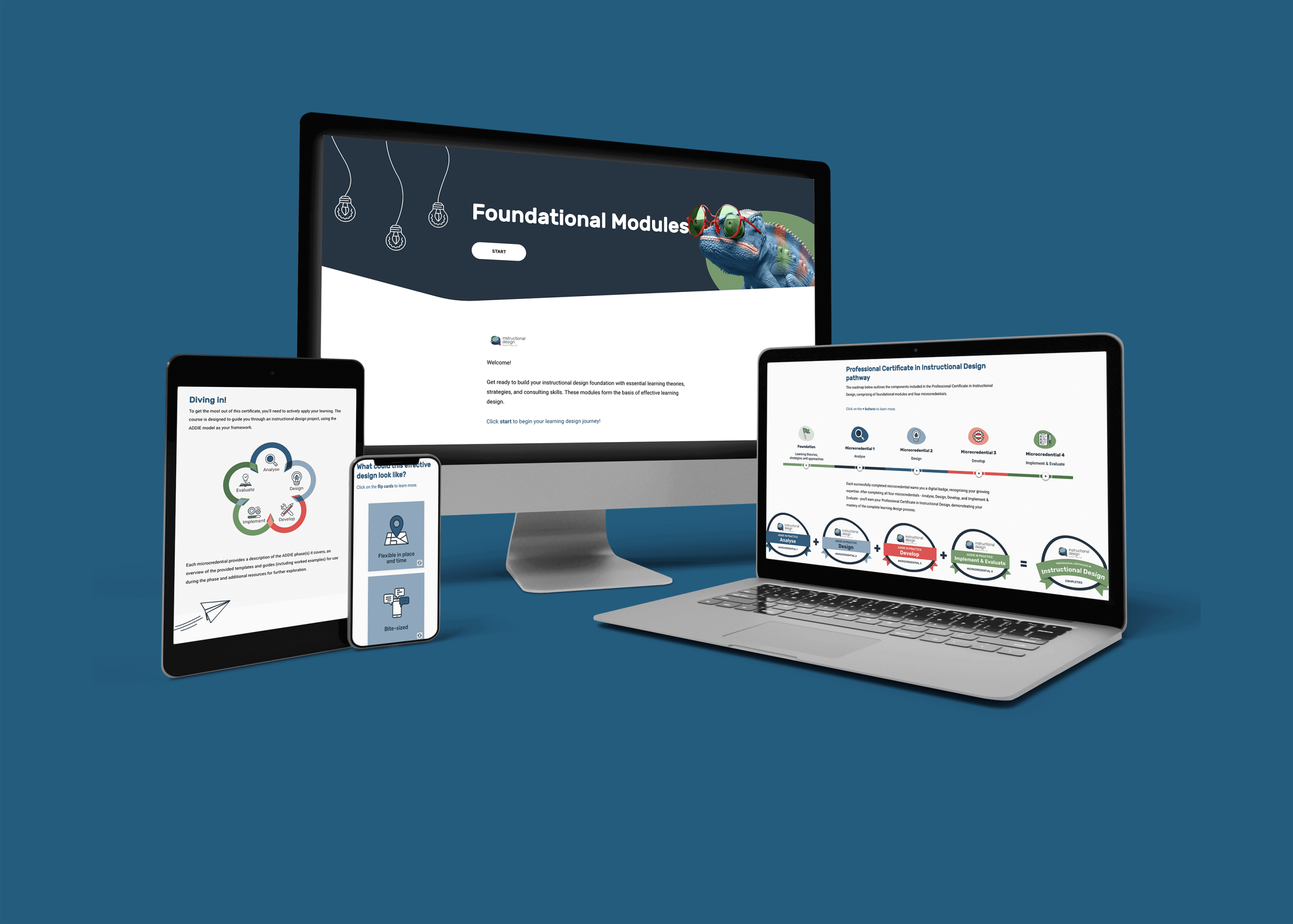
Earn your Professional Certificate in Instructional Design in just 12 weeks. One course – served with coaching, ready-to-use templates, a design portfolio, and a network that backs you.
FAQS
There is – and it’s picking up speed. As work changes, so does the need for learning that’s clear, practical, and behaviour-focused. If you can design learning that actually sticks, you’ve got a future.
Instructional designers come to it from a range of pathways. Some have a mix of education, experience, and curiosity. Others have degrees in education, psychology, or communication. They might come from teaching, UX, or content roles and learn on the job.
What matters most? Knowing how people learn, designing with purpose, and building learning that works. Tools and theory can be taught. What sets great designers apart is their ability to think strategically, ask the right questions, and make the complex feel simple.
Hungry for more?
Related blog articles: