

Build an instructional design career – get the tools and skills you need to get hired.
By Bianca Schimizzi
Director & Lead Instructional Designer | Hungry Minds
Whether you’re just getting started, shifting from a related role, or aiming to sharpen your edge – this guide is packed with practical insights from inside the instructional design industry. Learn what today’s most effective IDs actually do, the skills that get you hired, and how to choose the right projects, paths, and professional development. If you want to do work that’s creative, strategic, and makes a difference – start here.
Here’s what’s inside:
- Why 2025 is the year to back your instructional design career
- What instructional designers actually do
- Five standout skills that get IDs hired, noticed, and promoted
- Finding your fit: freelance, in-house, or consultant?
- Coaching for IDs: when to invest and what you’ll get out of it
- Choosing the right ID course
- Inside the Hungry Minds Professional Certificate
- From solo skills to team capability: how to scale your impact
- The next step in your instructional design career
- Design your future with confidence
2025 is the year for your instructional design career
Instructional design is the perfect blend of creativity, problem-solving, and real-world impact. Not only that, it’s one of the few roles where you can actually shape how people learn, grow, and succeed. Powerful stuff.
Here’s the good news: in 2025, organisations are doubling down on that need. With budgets tighter than ever (and a flood of forgettable, ineffective AI generated courses), smart teams know they need more than content. They need skills. Learning that’s strategic, sticky, and built for how people actually work. That’s what you’ll bring to life in your instructional design career: solutions that shift behaviour, build confidence, and drive change.
What instructional designers actually do
As an instructional designer, you bring clarity and solutions. Your work sits at the sweet spot between learning science, business goals, and user experience – and when it’s done right, it makes a huge difference.
The best IDs use a clear process to guide every decision. And our ride-or-die project compass is ADDIE. Here’s how it works:

Analyse – be curious
Start by investigating what’s going on under the hood. What’s missing? What’s needed? Review data, talk to stakeholders, and spot the difference between a training need and a culture problem. This step sets up everything else.

Design – be creative
Sketch the blueprint. This is when you define clear learning outcomes, sequence the content, map out delivery methods, and identify risks or constraints. Make early decisions about format, tech, and timing – so the solution fits the problem and the humans who’ll use it.

Develop – get pilot-ready
Now’s the time to write, prototype, and iterate. No matter the format, the goal is the same: make it clear, engaging, and easy to apply. And test it to high heaven before it reaches the learner.

Implement – dive in
Time to roll it out. Prep facilitators, support the comms plan and test the tech. Launch smoothly, troubleshoot early, and make sure the experience holds up where it counts: on the learner’s side of the screen.

Evaluate – reflect
Measure what mattered. Analyse feedback, outcomes, and performance shifts. Identify patterns and turn them into insights. The goal isn’t just to prove it worked – it’s to improve what comes next.
A clear structure powers good learning design. It helps teams stay aligned, learners stay engaged, and projects stay on track – without losing the creative spark.
Instructional design IRL
At CHIA Vic, the team wanted more than better content – they needed better design thinking. We used ADDIE from day one to sharpen focus, redesign key programs, and equip their team with the tools and confidence to do it themselves.
Read the case study: How CHIA Vic built better learning to serve Victorians who need housing.
5 must-have skills for your instructional design career
No one hires an instructional designer without goals. They want learning that solves problems, reduces friction, and expands the skill base. These five skills do the heavy lifting – and they’re what employers and clients look for first.
Learning analysis
This is where you turn vague requests (“we need a course”) into insights that solve their problem. You need to understand the context and spot problem areas. First, you ask sharp questions. Then you synthesise the information into real insights that guide your design.

Learning science
Good instructional design is rooted in learning science. Start by using tools like spaced repetition, retrieval practice, and cognitive load theory. Then, embed them into activities that feel practical – not theoretical. That’s how you turn knowledge into action.

Design thinking
Instructional design needs a structure. Models like ADDIE, First Principles, and experiential learning help you frame your thinking and sequence your design. Start by choosing the right framework for the challenge. Then adapt it to fit the project’s goals, constraints, and context.

Stakeholder savvy
Instructional design is a team sport. You’ll be working with subject matter experts, project leads, and end users – often all at once. Start by asking clear questions and turning business goals into learning outcomes. Then keep the project moving: make decisions, manage feedback, and bring people along. When you manage stakeholders well, you get clearer goals, faster decisions, fewer reworks – and a strong, supported solution.

Perfect portfolio
Hiring managers want to see how you think, not just what you made. To create a great portfolio, start by choosing a project that solves a real problem. Then document the challenge, your process, and the outcome. Use your portfolio to tell the story behind your design decisions. A well-crafted portfolio shows your work – but it’s more than that. It’s your chance to demonstrate your judgement, logic, and abilities.
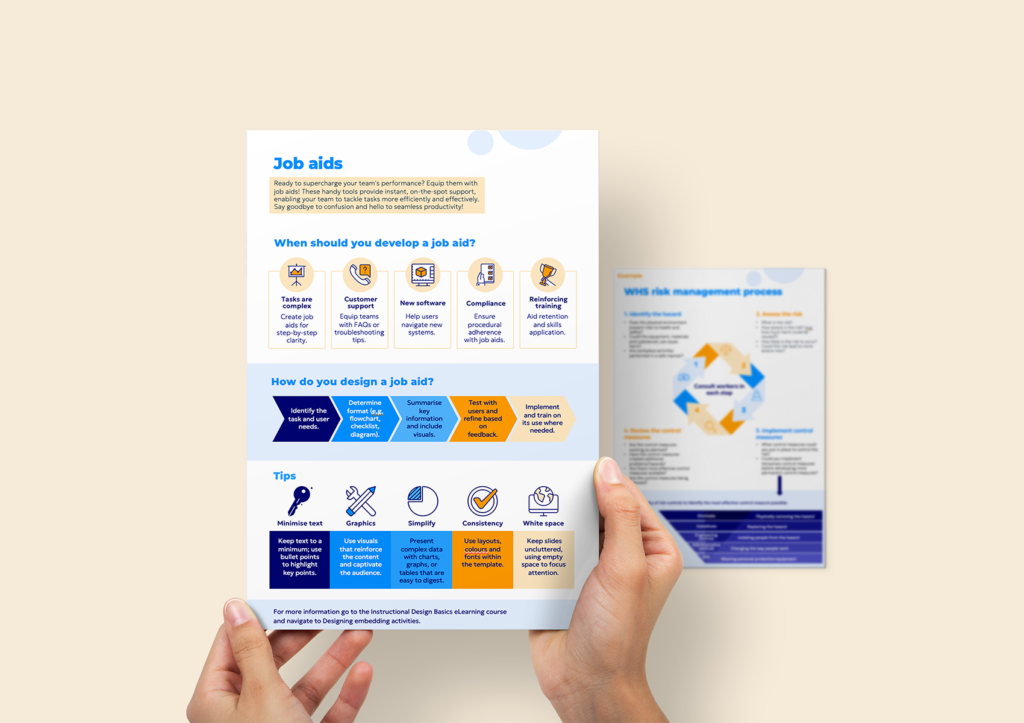
Your ID toolkit
Together, these five skills form the foundation of great instructional design. They’re how you build learning that’s strategic, practical, and genuinely useful. And once you’ve got them in your toolkit, the next step is choosing where – and how – you want to put them to work.
Finding your fit: freelance, in-house, or consultant?
Once you’ve built your core skills, it’s time to decide where to apply them. Instructional designers work across industries and setups – some embedded in learning teams, others flying solo, and many somewhere in between.
In-house roles
Many organisations have dedicated learning teams. You’ll work closely with stakeholders, build learning over time, and get to know the culture and context inside-out. This is for you if you want stability, long-term growth, and the chance to influence how a business learns over time.
Consulting gigs
Work with clients on a project basis – either independently or through a learning agency (like us!) Expect variety, fast-paced delivery, and exposure to different industries and audiences. If you’re strategic, adaptable, and enjoy jumping into new problems, this could be for you.
Go freelance
Once you’ve gained some experience, you may like to run your own show. Choose your specialty – it could be development (like building Rise modules), focus on design strategy, or offer end-to-end learning solutions. Freelancing offers flexibility, but you’ll need to handle the business side too, including pricing, proposals, and pipelines.
Consider this:
- How do you like to work: collaboratively, independently, or both?
- Do you prefer deep dives with one organisation – or a broad mix of briefs?
- Are you building toward a long-term niche, or exploring your options?
There’s freedom to move between paths as you grow. Some of the best IDs we know have been in-house, freelanced, and consulted – each experience sharpening different skills. But no matter the path, one thing accelerates your progress: coaching.
Instructional design coaching
Instructional design is full of nuance. It’s not just what you build – it’s how you think about the problem, shape the learning, and explain your choices. That’s where coaching comes in.
One-on-one coaching with an instructional designer helps you:
- Stress-test your ideas before you commit to them
- Spot gaps in your process (and fix them early)
- Get tailored feedback that moves your work forward
- Build the confidence to explain your decisions clearly and strategically
Coaching can accelerate your growth – but it’s even more powerful when paired with the right learning environment. If you’re thinking about levelling up, the next step is choosing a course that actually improves your ID skills and makes you easy to hire.
Choosing the right ID course
Choosing an instructional design course can feel overwhelming. Some look great but aren’t based in learning science. Others drown you in theory without teaching you how to use it. And too many promise job readiness but leave you with nothing to show for it – no portfolio, credential, or real-world experience.
If you’re looking to grow your skills – or shift into ID entirely – here’s what to look for:

Practical projects
A good course includes hands-on projects that reflect what clients and teams need. Bonus points if those projects can go straight into your portfolio.

Expert feedback
In order to grow as an ID, you need useful feedback from people who know the job. Choose a course that connects you with an experienced ID. They’ll help by reviewing your work, challenging your approach, and sharpening your skills.
Tools and templates
A great course goes beyond telling you what to do – it shows you how. The right tools and templates help you plan, structure, and refine your work with confidence. And once you’ve used them once, you’ll reach for them again and again.

Coaching for confidence
You don’t have to go it alone. The right course includes access to coaching – one-on-one support from someone who’s done the job and can help you think like a designer. It’s a shortcut to clarity, momentum, and better results.

Proof of progress
Look for a course that strengthens your portfolio. You’ll finish with demonstrable skills, actionable feedback, and a clear way to show what you’ve learned.
Make it yours
Perhaps most importantly: Make sure the course actually reflects the kind of work you want to do. If the examples are stuck in rigid corporate jargon – immediately no. Look for a course that explicitly teaches creative, strategic, human-centred learning.
A good course builds more than knowledge – it builds your skills. With the right project, the right tools, and the right support, you walk away with solid work, sharp skills, and a clear sense of what you can do next.
As for us…we got tired of looking for the perfect course. So we built it ourselves.
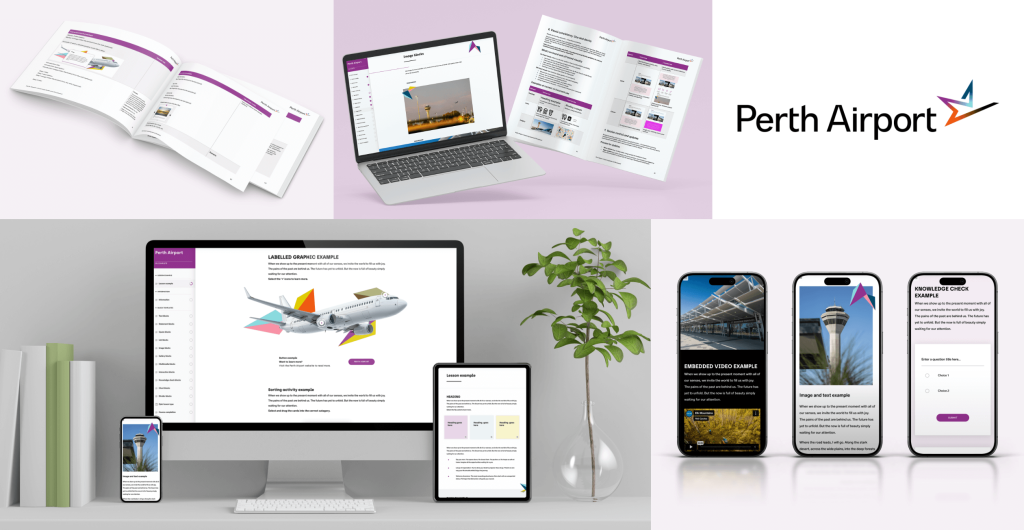
Inside our Professional Certificate of Instructional Design
Made by working IDs. Designed to help you do the job well.
After searching high and low, we built the course we wanted when we were starting out. It’s practical, strategic, and full of skills you’ll actually use. Everything in the Professional Certificate is designed to help you think like a designer, practice with purpose, and kick-start your portfolio.
Speaking of your portfolio…
From the start, you’ll be working on a project that mirrors what clients and employers ask for. With a focus on needs analysis and design decision making, you’ll produce a learning experience that holds up IRL. And you’ll get feedback from senior IDs as you go – making this the perfect addition to your professional portfolio.
One-to-one coaching
Work one-on-one with a senior ID who’s been in the thick of it. Across three sessions, you’ll get personalised, strategic feedback that sharpens your thinking and helps you design with more clarity and confidence.
Meet the team behind the course
Every coach in the program is an experienced ID. So you’re learning from the best – people who do this work every day.
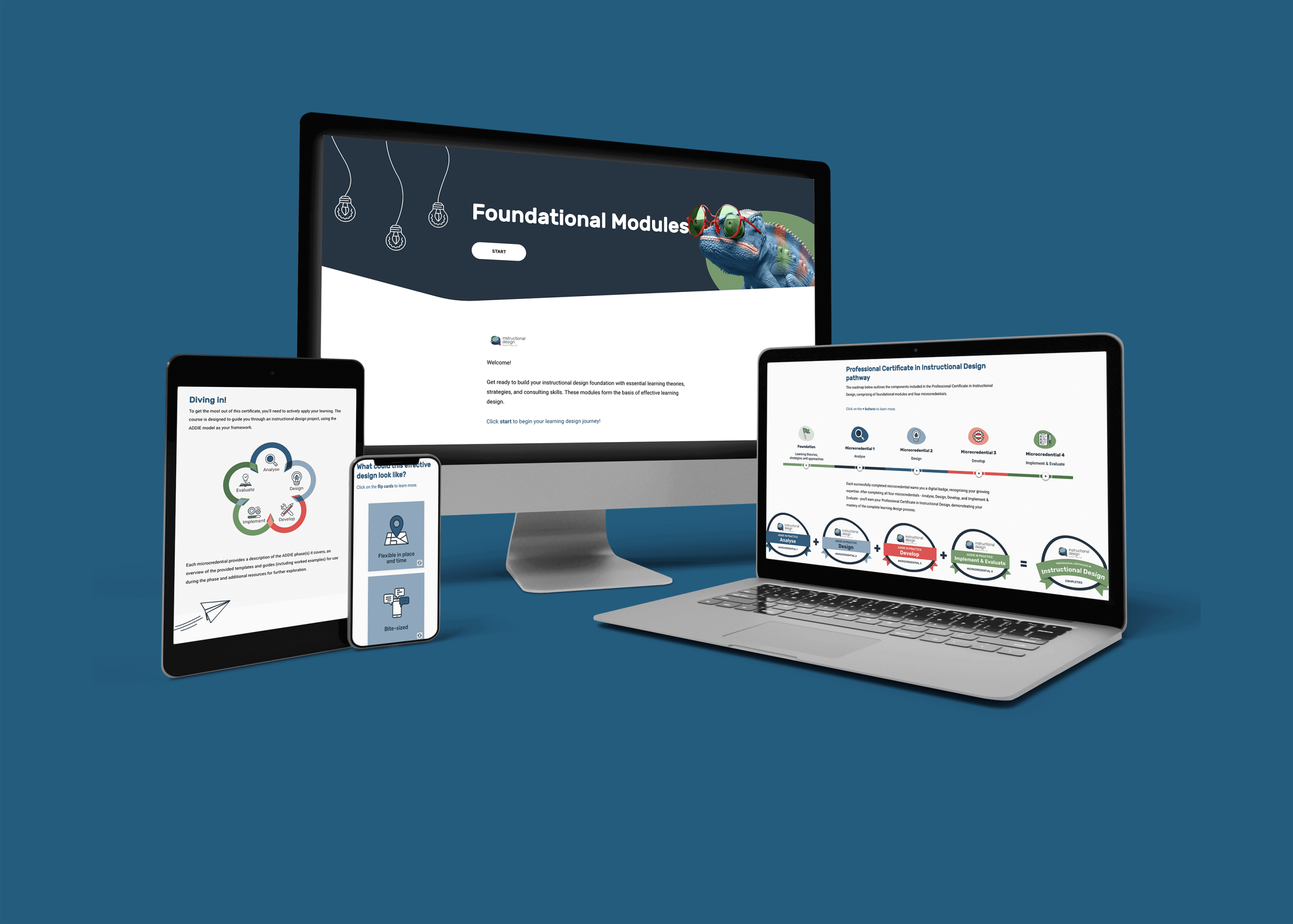
4 stackable credentials
Each part of the course is designed to help you master a core skill area – and show off your skills. You’ll finish with four digital badges and a certificate that actually means something.

Tools, templates, and workflows
Why start from scratch? Get access to the exact tools we use on client projects – so you can stop guessing and start designing.
A smart, generous community
Our alumni network (led by our own Hungry Minds team) is full of thinkers, doers, and career changers who’ve walked the same path – and who are happy to share what they’ve learned.
The Professional Certificate of Instructional Design gives you the structure, support, and stretch to grow as a designer – and the confidence to back it up. You’ll leave with work that proves your thinking, tools that improve your process, and skills you’ll keep building on.
Start your instructional design career now
Earn your Professional certificate in instructional design in just 12 weeks. One course – served with coaching, ready-to-use templates, a design portfolio, and a network that backs you.
And if you’re not just designing for yourself – but leading a team, a project, or a bigger learning vision – the next step is building capability at scale.
Professional Certificate in ID for teams
So far, we’ve focused on individuals. But what if you’re leading a learning team? In that case, you need more than one capable designer. You need your whole team thinking like instructional designers.
You’re in luck.
At Hungry Minds, we work with organisations across finance, health, education, government – and beyond – to embed instructional design into everyday learning practice. It becomes part of how teams think, plan, and deliver learning that works. So it’s more than a set of skills – it’s a shared language and strategic process. With these skills embedded, teams make sharper calls, solve the right problems, and – eventually – create a strong learning culture.
Watch ID for Teams cook
Instructional design IRL
We build programs around your team’s actual challenges – using your content, your context, and your tools. That means every session is practical, every example is relevant, and your team can apply what they’ve learned straight away. It’s training that delivers immediate value and drives lasting change.
Tools for consistency
We hand over decision maps, templates, and workflows that streamline design across the team. Custom, practical tools your people will reach for again and again. Because when everyone’s using the same toolkit, quality goes up – and friction goes down.
Design thinking
We train teams to ask better questions, pinpoint the real need, and make learning decisions that hold up under pressure. That means fewer reworks, stronger outcomes, and a more confident, capable team behind the scenes.
Build great design into your team
When your team shares a clear, practical approach to learning design, everything gets easier. Projects move faster. Feedback lands better. You find the right solutions in less time. Alongside a set of shared tools, give your team the skills they need to think through complexity – and make smart design decisions at speed.
That’s what instructional design capability looks like at team level. It’s strategic, repeatable, and embedded in the culture of your organisation. And we’re here to help you build it.
If you’re ready to bring instructional design to life in your team, book a call with Michael or give us a call on 1300 162 393.
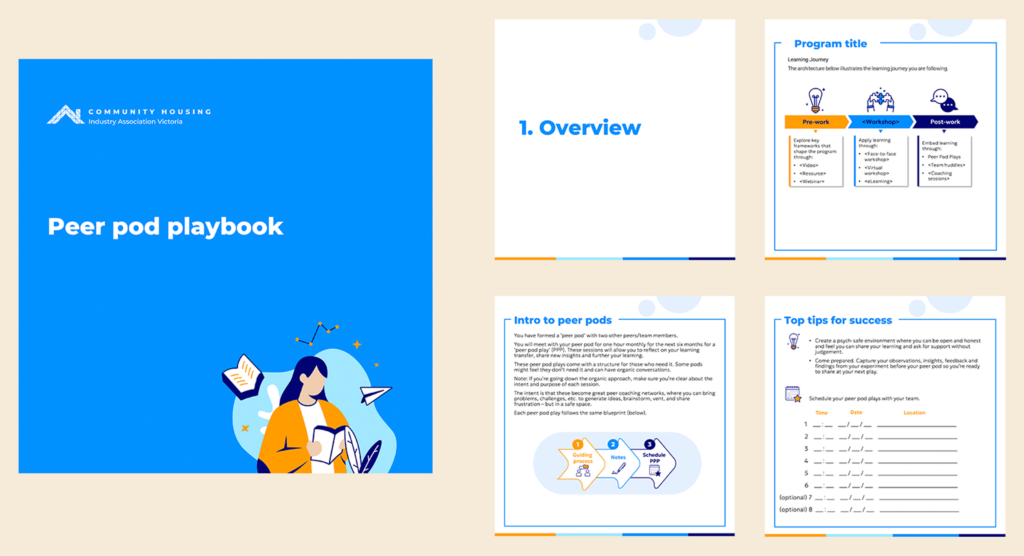
Instructional design IRL: How CHIA Vic build learning they could own
Community Housing Industry Association Victoria (CHIA Vic) had solid learning programs that covered the essentials. But they wanted their training to inspire, engage, and stick.
So they partnered with Hungry Minds. We reviewed what was already working, identified what could be better, and built capability for the long haul. We designed a custom course around CHIA Vic’s content, context, and learning goals, paired with a toolkit of ready-made templates, guides, and resources.
With four refreshed courses and a tailored instructional toolkit, they’re designing with confidence – and they’ve equipped their team with the know-how to continually improve their programs.
Read the case study: How CHIA Vic built better learning to serve Victorians who need housing.
Instructional design IRL: How South32 scaled leadership development across regions
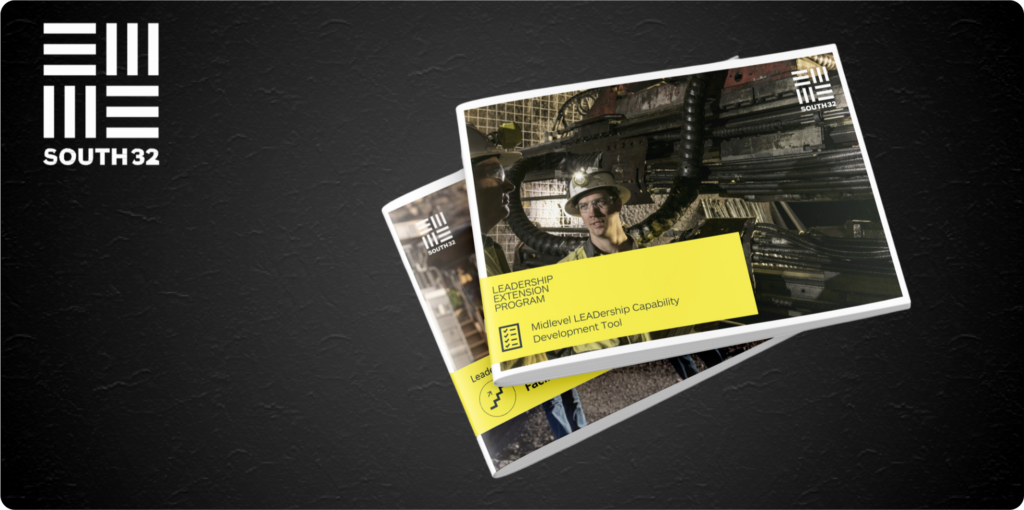
South32 needed to equip mid-level leaders to uplift people – not just projects. Together, we co-designed a blended learning experience that combined three full-day, face-to-face workshops with virtual social learning circles and guided coaching conversations.
Now South32 has a full leadership ecosystem – a repeatable way to grow good managers into grounded, capable leaders. Read the case study: How Hungry Minds helped South32 turn capable managers into confident, connected leaders.
Sink your teeth into your instructional design career
Instructional design is one of the few careers where you can be strategic, creative, and genuinely useful – every single day. With over 400 opportunities listed on Seek.com.au (at time of writing), and continued growth predicted, there’s no better time.
You could spend months figuring it out. Or 12 weeks doing it right.
Start your Professional Certificate of Instructional Design today. One course – served with coaching, ready-to-use templates, a design portfolio, and a network that backs you.