

Find out the skills you need to get hired (plus a few extras that’ll make your portfolio impossible to ignore!)
If you’re looking for a job in instructional design, knowing how to use the tools won’t be enough. Employers want designers who can solve real problems, create learning that sticks, and show they know how to think. Keep reading for a breakdown of the instructional design skills that actually get you hired.
Learning analysis
Great learning design starts long before the storyboard. That’s why the Learning Needs Analysis phase is essential to the process. Strong instructional designers hone the skills to work out what’s really going on – what’s missing, what’s blocking progress, and whether learning is even the answer. Sometimes the culture is the problem and sometimes it’s something else entirely. It’s your job to map the gap, find the levers, and recommend the right solution.
Learning science
Good instructional design is built on how people actually learn – not just what they need to know.
That’s where learning science comes in. Techniques like spaced repetition, retrieval practice, and scaffolding aren’t theory for theory’s sake – they’re what make learning stick. That’s why we draw on cognitive research (like Ebbinghaus’ Forgetting Curve and Merrill’s First Principles) to design experiences that are easy to absorb and hard to forget.
It’s also about flow. We reduce the cognitive load to keep learners engaged. And we break content into meaningful chunks to help people remember what they’ve learned. Done right, learning science improves performance, boosts confidence, and makes training memorable.
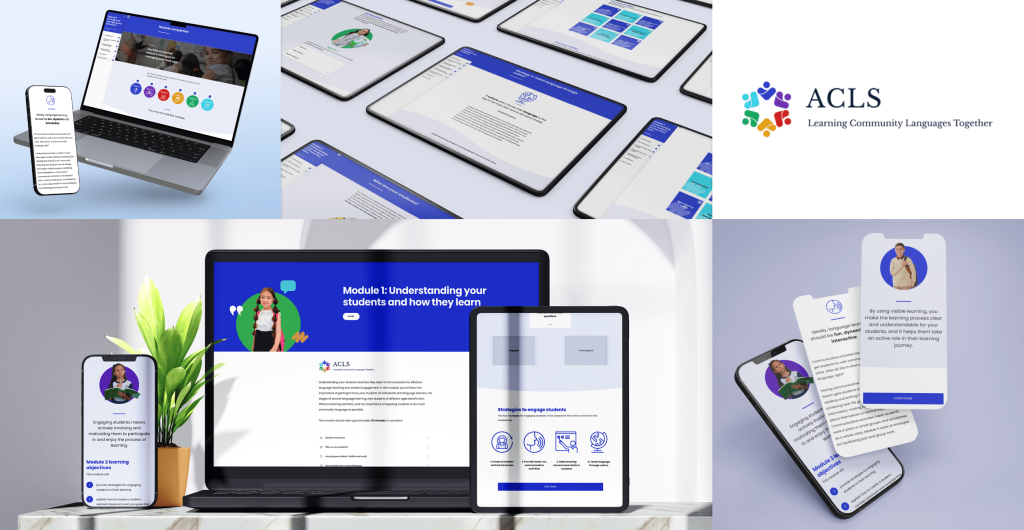
Instructional design IRL: How ACLS gave teachers the tools to support neurodivergent learners
Learn how we equipped passionate community language teachers with the skills to confidently engage young students in the classroom – backed by learning science that works.
Design models
If you’re getting started in design, frameworks are the best place to start.
ADDIE is great when you’re scoping something big or working across a team. First Principles helps when you’re designing complex skills that need to be broken down and practised. And experiential models are useful when you want people to reflect, apply, and adapt in real time.
The trick is knowing which model to reach for. After that, you need to know when to lean into the model, and when to get nimble so you can deliver exactly what the client needs.
On the tools
Strong instructional designers know their tools – and how to pick the right one for the job.
The key is being deliberate. Before you build, ask:
- What do I want the learner to do?
- Where and how will they access the content?
- How can I use this tool to streamline the process?
Your portfolio and brand
When hiring managers look at your portfolio, they want to understand the process, not just the results. Use annotations, case studies, or a quick Loom walkthrough to share your thinking. Show how you scoped the project. Make it clear: what did you build, and why?
Each project should include:
- The problem
- Your approach
- What changes as a result
Team player
Like it or not, instructional design is a team sport. The stronger your stakeholder skills, the easier it’ll be to build trust and buy-in. And you’ll need both of them if you want your learning to land and stick.
Be ready to:
- Lead productive conversations with subject matter experts
- Turn business goals into learner outcomes
- Take and give feedback without losing focus
- Keep projects moving when priorities shift
Get ready to cook
We love this stuff so much, we wrote the full guide. Check out Instructional Design IRL: A guide for industry pros, BY industry pros. It’s packed with everything you need to know if you’re planning to make instructional design your bread and butter.
Get started today
Explore the Professional Certificate in Instructional Design to turn up the heat in your ID career.
FAQS
Good instructional design starts with asking the right questions – what’s the problem, who’s learning, and what needs to change? From there, you design the experience, build the content, deliver it in a way that makes sense, and measure what actually worked. Most IDs follow a model like ADDIE to keep things sharp, focused, and on track from start to finish.
Here are the big four: Clarity, relevance, practice, and feedback. Great instructional design makes learning easy to follow, tied to real work, built for action, and shaped by what learners need.