
Learning journeys: what they are, five real examples, and how to design one
A learning journey spreads learning over time so it actually sticks. See five worked examples, an eight-step design process and what platforms you need.
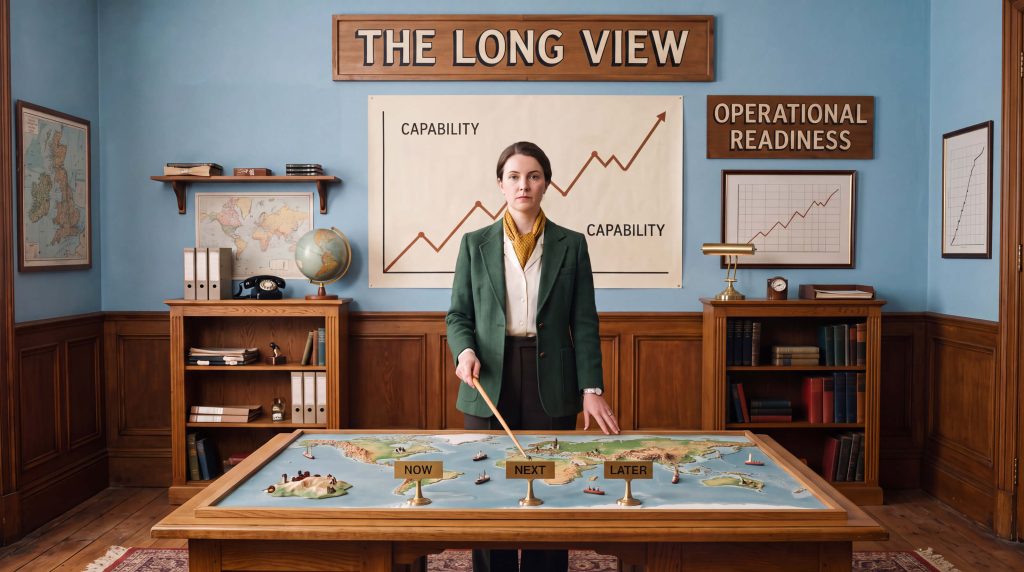
Read moreLearning strategy is the plan that connects what your people need to learn with what your organisation needs to achieve.
This hub, part of the Hungry Minds learning resources library, covers how to diagnose capability gaps, build frameworks that scale, and design learning systems that drive real performance, not just activity. Built for L&D leaders, HR directors and executives who need training investment to deliver measurable results.
A learning journey spreads learning over time so it actually sticks. See five worked examples, an eight-step design process and what platforms you need.
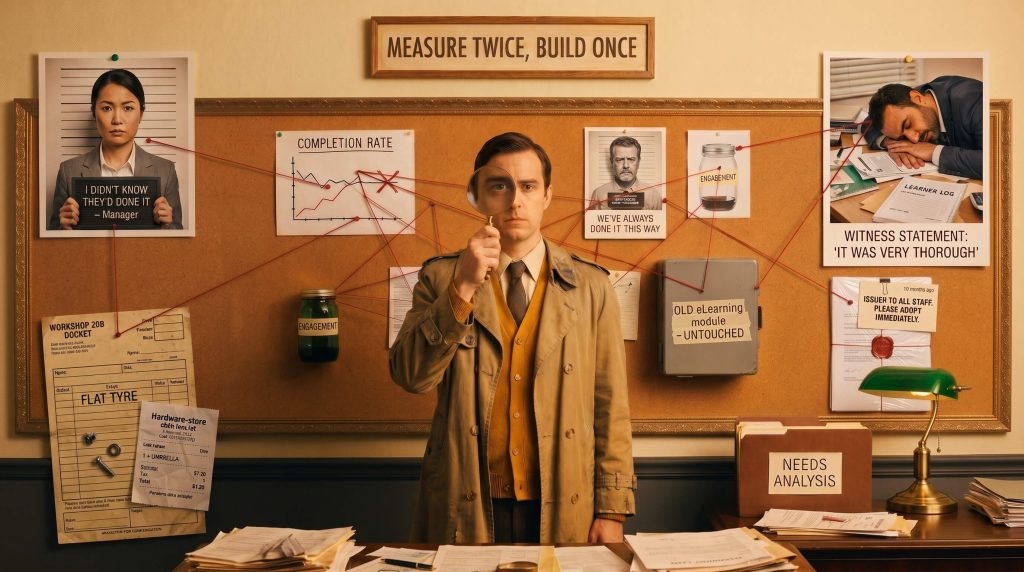
Read moreA learning needs analysis diagnoses the real performance gap before you build anything. Learn how Hungry Minds runs an LNA – and why it saves you money.
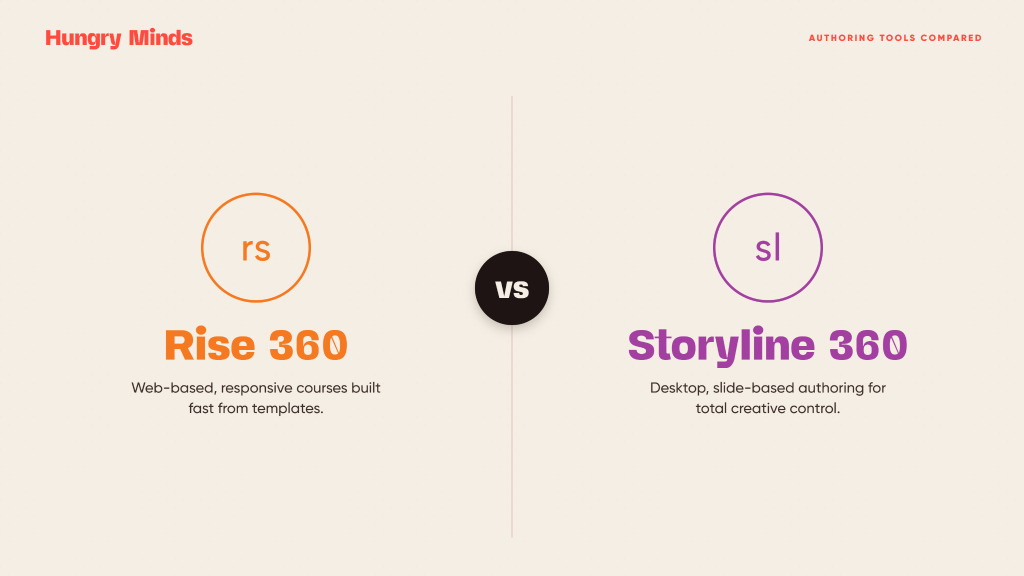
Read moreRise 360 and Storyline 360 are both part of Articulate 360 but built for different things. Find out which tool fits your project, timeline, and learners.
Read moreSpot the real change through behaviour, culture, and what people actually do next. This one’s for the post-training quiet. After the workshop’s wrapped…
Read moreBuild a learning culture that fuels real behaviour change – starting with the right systems. You want your learning initiatives to drive real change…
Read moreIf your learning strategy looks sharp but falls flat, you’ve got company. Weak training foundations quietly drain performance, culture, and momentum in…
Read moreLet’s get real: training budgets don’t roll over – but the good news? Your plans can. If you’ve got unused L&D dollars sitting idle, now’s your…
Read moreIf training feels like a sunk cost with no real payoff, you’re not alone. Poor training quietly drains performance, culture, and capability. But here’s…
Read moreTL;DR? Content design is what you build. Instructional design strategy is why and how you build it. If your learning isn’t shifting behaviour or lifting…
Read moreNeed help with learning strategy and capability?
Let’s talkWe turned Clare Valley's service promise into a pick-and-mix learning campaign for cellar door teams, with eLearning, podcasts and job aids. See how.
Read articleLearning strategy is the deliberate alignment of learning investment with business outcomes. It answers three questions: what capabilities does the organisation need, where are the gaps, and what is the fastest path to closing them? Without a strategy, training becomes reactive. A new system launches, so someone builds a course. A compliance deadline hits, so someone books a workshop. None of it connects to a bigger picture.
A real learning strategy starts upstream of any course or program. It starts with the business problem, maps the capability gap, then designs the right mix of formal learning, on-the-job development, coaching and systems support to close that gap. The output is not a training calendar. It is a roadmap that makes capability building a business function, not an HR task.
We work with organisations to build learning strategies that survive contact with reality: grounded in evidence, scoped to budget, and designed to be measured. Strategy without execution is a slide deck. We build both.
“Learning strategy” covers a broad territory. Most organisations need a combination of these disciplines working together, not one in isolation. Knowing which lever to pull first saves months of wasted effort.
The diagnostic step most organisations skip. A learning needs analysis identifies the gap between current capability and required capability, then determines whether training is actually the right intervention. Sometimes the answer is a system fix, not a course.
More specific than a learning needs analysis: a training needs analysis pinpoints exactly what skills or knowledge a defined group of people need to develop, and recommends the format, sequencing and priority of training to address it.
A capability framework defines what “good” looks like at each level of a role or function. It gives leaders a shared language for development, promotion and succession planning, and gives L&D teams a clear target to design toward.
Structured initiatives that move a team or workforce from one level of capability to another. Not a single course, but a designed system: learning pathways, practice opportunities, coaching, assessment and reinforcement over time.
The operating rules that determine how learning is prioritised, funded, approved and measured across an organisation. Without governance, every team builds its own thing and nothing connects.
Performance consulting reframes the question from “what training do we need?” to “what is causing the performance gap?” The answer is often a mix of environment, motivation, tools and skill. Training alone rarely fixes a systemic problem.
Good learning strategy runs on frameworks that connect learning activity to organisational impact. These models give structure to what would otherwise be ad hoc decisions about where to invest.
A learning ecosystem is the full system of formal training, informal learning, knowledge sharing, coaching, mentoring, performance support and technology that enables people to develop. Designing at this level means you stop treating courses as the only lever.
Roughly 70% of development happens on the job, 20% through others, and 10% through formal programs. Strategy that only funds the 10% leaves 90% of the system to chance. We design across all three.
A learning operating model defines how L&D is structured, resourced and connected to the business. It covers team structure, technology stack, vendor management, content governance and reporting. Getting this right means L&D scales without breaking.
Workforce capability planning maps future skill requirements against current workforce composition. It turns “we might need AI skills in two years” into a costed, sequenced development plan with clear milestones.
The guides below explain each model in depth and, more usefully, when to reach for it. Because a capability framework solves a different problem than a learning needs analysis, and deploying the wrong one wastes time.
We do not hand over a strategy document and disappear. Our approach connects diagnosis to design to delivery, so the strategy actually becomes programs people use.
That means: stakeholder interviews to understand the real problem (not just the brief), data analysis to validate the gap, co-design with subject matter experts, and a roadmap that sequences work into achievable phases. We build learning strategies for government departments managing thousands of staff, health organisations navigating regulatory change, and mid-size companies scaling faster than their capability systems can keep up.
The common thread: every strategy we build is designed to be implemented, not admired. If it cannot be executed within budget and timeline, it is not a strategy. It is a wish list.
A capability framework for a mining company and a learning strategy for a government department look completely different on the surface. Different risks, different regulators, different workforce structures, different constraints. But the methodology underneath is the same: diagnose the gap, design the system, build for the outcome.
We have built learning strategies across government, health, financial services, mining, education and community services. The craft adapts to context. The rigour does not.
The things people ask us most. Got something else? We’re happy to chat.
Ask a question